A note before we begin: CarOracle is a California-licensed auto broker. We are not tax advisors, and nothing in this article constitutes tax advice. What follows is an overview of the structural variables that affect how a vehicle acquisition is treated for tax purposes, written to help California real estate agents arrive at the conversation with their CPA better prepared. Your income, your entity structure, your vehicle choice, and your city of registration all affect the outcome. The professional guidance comes from your accountant. The vehicle sourcing comes from us.
Introduction: Why This Is Not a Simple Decision
For California real estate agents, their vehicle is a working tool, present at every client meeting, every property tour, every open house. It is also, for many agents, the largest financial decision they make on a regular basis, and one where the structure of the transaction matters as much as the price of the vehicle.
The One Big Beautiful Bill Act (OBBBA), signed into law on July 4, 2025, permanently restored 100 percent federal bonus depreciation for qualifying business property acquired and placed in service after January 19, 2025. For self-employed agents who have heard about this provision, two questions follow immediately: does my vehicle qualify, and does California recognize it? The answers diverge in ways that are worth understanding before you sign anything.
This article lays out the key variables. It does not tell you which path to take. That determination belongs to your CPA.
Purchase vs. Lease at a Glance
The table below summarizes the key differences. The right choice depends entirely on your situation. Neither column is universally superior.
| Factor | Purchase (Finance to Own) | Retail Closed-End Lease |
|---|---|---|
| Federal depreciation | Up to 100% bonus depreciation in year one (if GVWR > 6,000 lbs) | Not available, lessor owns and depreciates the vehicle |
| California depreciation | Section 179 capped at $25,000; remainder via MACRS over 5 years | Not applicable |
| Tax deduction | Depreciation + interest (if US-assembled vehicle) | Lease payments deductible as operating expense |
| Sales tax (California) | Due in full at registration, based on city rate | Due monthly on each payment only |
| Residual value risk | Yours, you own the vehicle | Lessor's, market depreciation is their problem |
| Mileage | No restriction | Typically 10,000–15,000 miles/year; overages can apply |
| DTI impact | Auto loan appears as debt | Lease treatment varies by lender; ask your mortgage broker |
| Best for | High-income year; heavy vehicle; long hold | Lower monthly overhead; high-rate city; property acquisition planned |
The Federal Picture
Two variables drive the federal depreciation outcome for a business vehicle.
Vehicle weight
The IRS draws a firm line at 6,000 pounds gross vehicle weight rating (GVWR). Vehicles above that threshold are not subject to the IRC Section 280F luxury auto depreciation limits. For those vehicles, purchased and placed in service after January 19, 2025, 100 percent federal bonus depreciation is available in year one, provided the vehicle is used more than 50 percent for business and business use is documented with a contemporaneous mileage log.
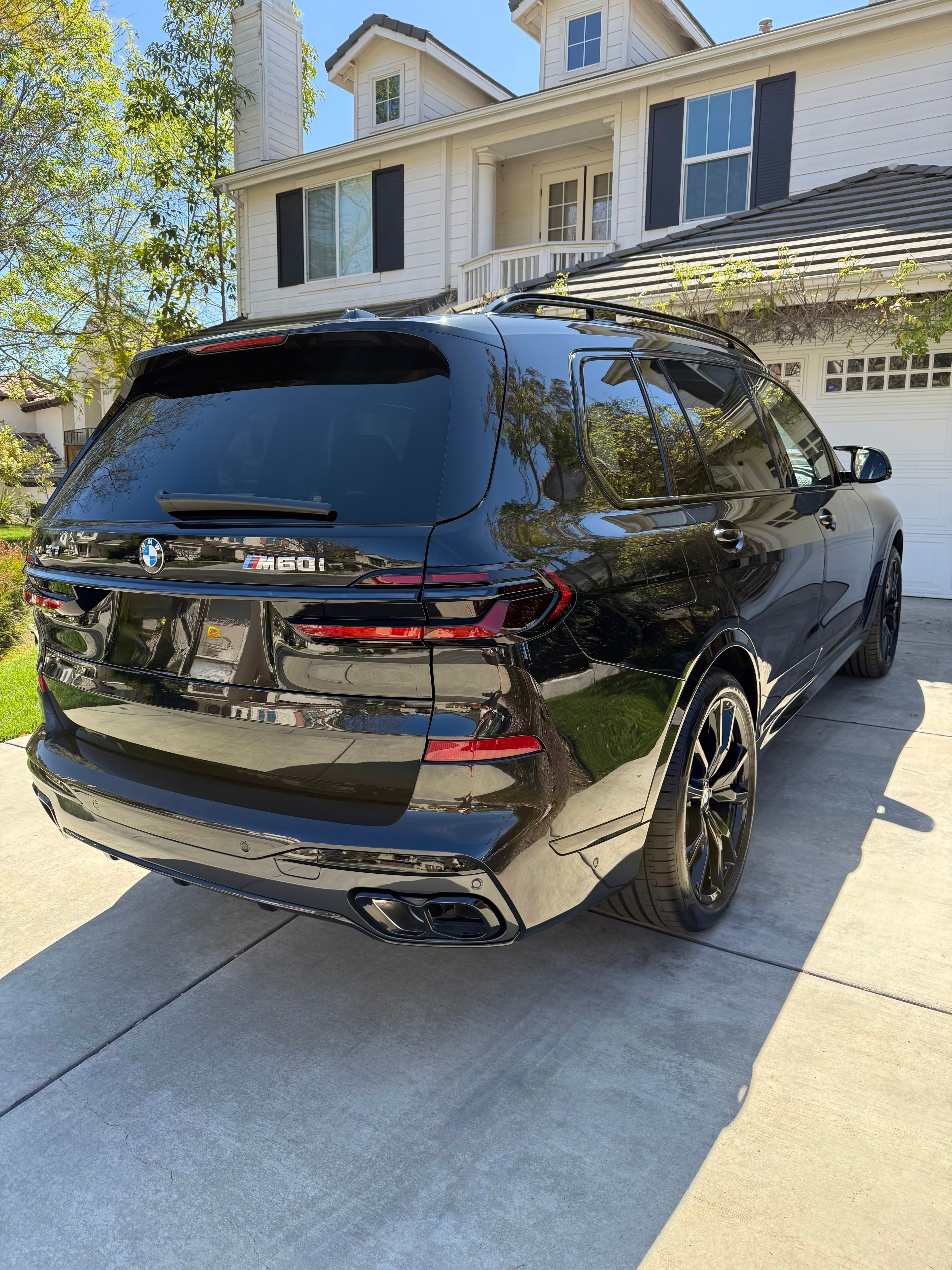
Vehicles at or under 6,000 lbs GVWR face annual depreciation caps regardless of purchase price. The cap applies equally to an $80,000 luxury sedan and a $35,000 compact. Many vehicles that real estate agents commonly drive, including popular luxury sedans and crossovers from BMW, Mercedes-Benz, Lexus, and Audi, fall below the 6,000-pound threshold. Vehicle GVWR is not a cosmetic detail in this decision. It is one of the first things your CPA will ask about.
For 2025, the IRS set the first-year depreciation limit for a passenger vehicle at $20,200 when bonus depreciation applies. Without bonus depreciation, the first-year limit is $12,200. Which one governs depends on how the vehicle is placed in service, and the difference is large enough to change whether a purchase makes sense in the year you make it.
The OBBBA auto loan interest deduction
New for tax years 2025 through 2028: interest paid on a financed new automobile may be deductible up to $10,000 per year. The vehicle must have been finally assembled in the United States. The deduction is available to both itemizers and non-itemizers. Assembly location varies by model and trim. Confirm with the dealer before finalizing a vehicle selection. The deduction phases out for modified adjusted gross income above $100,000, or $200,000 for joint filers, per the IRS.
The California Layer
California does not conform to the One Big Beautiful Bill Act. The California Franchise Tax Board limits Section 179 expensing to $25,000 and disallows bonus depreciation entirely, per Revenue and Taxation Code Sections 17250 and 24356. Any federal bonus depreciation taken must be added back to state taxable income and recovered through standard Modified Accelerated Cost Recovery System (MACRS) depreciation over five years, which in practice spans six tax returns due to the half-year convention.
The practical consequence: a California agent who purchases a qualifying heavy SUV and takes 100 percent federal bonus depreciation in year one will still owe California tax on the full vehicle cost in that year, minus only the $25,000 Section 179 allowance. Federal and state taxable income diverge materially. Your CPA must maintain two parallel depreciation schedules, one for each return.
This is not a planning risk that resolves itself. It requires active management and is one of the most consequential differences between what the federal tax environment now offers and what California will actually honor.
Purchase: The Variables
Purchasing a vehicle, whether through financing or outright, gives the buyer ownership and the associated depreciation treatment. For California real estate agents, several variables determine whether a purchase makes sense in a given year.
Does the vehicle exceed 6,000 lbs GVWR? This determines whether federal bonus depreciation is available without the Section 280F ceiling. Heavy SUVs, full-size pickup trucks, and certain larger crossovers may qualify. The manufacturer's specifications page will confirm the exact figure for the model and configuration you are considering. GVWR is also listed on the door jamb sticker of the vehicle.
Is the vehicle assembled in the United States? This determines whether the OBBBA auto loan interest deduction of up to $10,000 applies. The National Highway Traffic Safety Administration's VIN decoder can confirm final assembly location by VIN.
Is this a high-income year that warrants a large federal deduction? The value of accelerated depreciation is greatest when your federal marginal rate is highest. An agent with an unusually strong commission year may have different priorities than one in a transitional year.
Has your CPA modeled both the federal and California outcomes side by side? The two returns tell different stories. A purchase that produces significant federal tax relief may still result in a higher California tax bill than a lease, depending on the vehicle and the year. That modeling is the work of a tax professional, not a broker.
What is the local sales tax rate where you will register the vehicle? California sales tax on a vehicle purchase is due at registration and is based on the combined rate for the city or jurisdiction where the vehicle will be registered. Rates vary across the state. In many cities in Los Angeles County the effective rate reaches 10 percent or above. On a $90,000 vehicle, a two-point difference in rate is $1,800 paid at inception and not recoverable. The California Department of Tax and Fee Administration publishes current rates by city.
Lease: The Variables
A retail closed-end lease transfers ownership risk to the lessor. At the end of the term, the lessee returns the vehicle. If the vehicle is worth less than the residual value established at signing, that loss belongs to the leasing company. The lessee's exposure is limited to excess mileage, excess wear, and any early termination penalties.
California sales tax treatment on a lease differs from a purchase. Sales tax applies to each monthly payment, not to the full vehicle price. In markets where the effective tax rate is high, including many cities in Los Angeles County, Orange County, the Bay Area, and parts of Riverside County, the cumulative sales tax on a lease is substantially lower than the lump-sum tax due on a purchase of the same vehicle. The exact difference depends on the rate, the lease payment amount, and the term. It is a number worth calculating with your CPA for your specific vehicle and jurisdiction.
The tax deduction on a retail lease is straightforward: lease payments are deductible as an ordinary business operating expense, in proportion to business use. There is no bonus depreciation for a lessee under a standard consumer lease. The lessor owns the vehicle and claims the depreciation. The lessee deducts the payments.
A lease may also be relevant for agents planning to finance investment property. How an auto lease obligation appears on a loan application compared to an installment purchase obligation is a question for your mortgage lender, but it is one worth asking before you commit to a structure.
Mileage is the primary practical constraint on a consumer lease. Real estate agents in active markets, particularly across the Los Angeles basin, the Inland Empire and Riverside County, and the Bay Area, often drive well above standard lease mileage allowances. Excess mileage charges typically run between $0.20 and $0.30 per mile. An agent driving 25,000 miles per year on a 12,000-mile lease is accumulating a liability throughout the term. That number belongs in the lease evaluation.
A Note on Commercial Leasing Structures
Some agents operating through a business entity, LLC or S-Corp, ask about commercial vehicle leasing arrangements that offer no mileage restrictions, flexible residual terms, and different tax treatment than a standard consumer lease. These structures exist. They are sourced through commercial fleet lenders, not consumer dealerships. Their tax mechanics, including how depreciation is claimed and how California treats the transaction for sales tax purposes, differ from a retail lease and from a standard purchase.
If your situation involves a business entity, high annual mileage, and a CPA who is actively managing your depreciation strategy, it is worth raising commercial leasing structures in that conversation. CarOracle works with lenders across those channels and can provide options once the strategic direction is established.
The Checklist: What to Bring to Your CPA
Before contacting CarOracle or any other broker to source a vehicle, take these questions to your accountant.
- What is my projected federal taxable income for this year, and is there a deduction I need to accelerate?
- Does the vehicle I am considering exceed 6,000 lbs GVWR, and have you confirmed that against the manufacturer's specification?
- Is the vehicle assembled in the United States, and does the OBBBA auto loan interest deduction apply?
- Do I operate through a business entity, and does that affect my financing or leasing options?
- Am I planning a real estate financing event in the next 24 months that makes my debt-to-income profile relevant?
- Have you modeled both the federal and California depreciation outcomes for a purchase, including the add-back and the MACRS recovery schedule?
- What is the combined sales tax rate for the city where I will register the vehicle, and have you compared the cumulative lease tax to the purchase tax for the vehicle I am considering?
- If I am leasing, does my projected annual mileage fit within the lease terms without generating excess mileage penalties?
Once those questions have answers, CarOracle can source and structure the transaction to the specification you and your CPA have agreed on. We handle the vehicle, the negotiation, and the transaction logistics. The strategy is yours and your accountant's to set.
How CarOracle Works with California Real Estate Agents
CarOracle is a California-licensed auto broker, license number 43082, operating as a buyer-side representative. We do not sell cars. We source them on behalf of clients across Los Angeles County, Orange County, the San Francisco Bay Area, Riverside County, and San Diego County.
For a real estate agent whose time and professional reputation are inseparable, the vehicle transaction is not a weekend project. CarOracle handles the sourcing, the dealer communication, the pricing, and the logistics. Delivery to your home or office is standard. Time at a dealership, if any, is measured in minutes rather than hours.
We work with agents who arrive having already spoken with their CPA. The clearer the structural direction, the better we can execute the transaction. A client who says "I need a closed-end lease, no cap cost reduction, 36 months, heavy SUV, Bay Area registration" gets a faster and more precise result than one who has not had that conversation yet. This article exists to help you get there.
Frequently Asked Questions
Can a California real estate agent deduct 100 percent of a vehicle purchase in 2026?
Federally, yes, if the vehicle exceeds 6,000 lbs GVWR, is acquired and placed in service after January 19, 2025, and is used more than 50 percent for business. The One Big Beautiful Bill Act, signed July 4, 2025, permanently restored 100 percent bonus depreciation for qualifying property. California does not conform to this provision. The state limits the deduction to $25,000 under Section 179 and requires the remainder to be depreciated over five years using MACRS. A tax professional should model both returns.
Does California allow bonus depreciation under the OBBBA?
No. California has not conformed to the OBBBA. Per Revenue and Taxation Code Sections 17250 and 24356, California disallows bonus depreciation and requires standard MACRS recovery. Federal and California taxable income will differ materially on a vehicle purchase that claims full federal bonus depreciation.
What is the 6,000-pound vehicle weight rule for tax purposes?
IRC Section 280F imposes annual depreciation caps on passenger automobiles with a GVWR of 6,000 pounds or less. The first-year cap for 2025 was $20,200. Vehicles above 6,000 lbs GVWR are exempt from these caps and may qualify for full bonus depreciation federally. GVWR is found on the vehicle's door jamb sticker or manufacturer specification sheet.
Is leasing a vehicle better than buying for a self-employed agent in California?
It depends on the agent's tax situation, income profile, entity structure, and planned use. Leasing avoids the California bonus depreciation issue but provides no large first-year deduction. Purchasing offers the federal deduction but triggers a California add-back. The right answer is specific to each agent and year. A CPA should model both scenarios before the transaction is structured.
Does California charge sales tax differently on a lease versus a purchase?
Yes. On a vehicle purchase, sales tax is due at registration on the full price, at the combined rate for the registration city. On a retail lease, sales tax applies to each monthly payment. The California Department of Tax and Fee Administration governs how vehicle sales tax is applied. For agents in cities with high combined rates, including many cities in Los Angeles County, the cumulative sales tax on a lease is substantially lower than on a purchase of the same vehicle.
What is the new auto loan interest deduction under the OBBBA?
The OBBBA introduced a deduction for interest paid on a financed new automobile, up to $10,000 per year, for tax years 2025 through 2028. The vehicle must have been finally assembled in the United States. The deduction is available to both itemizers and non-itemizers. Not all vehicle models or trim levels qualify based on assembly location. Confirm with the dealer before selecting a vehicle. The deduction phases out for modified adjusted gross income above $100,000, or $200,000 for joint filers, per the IRS. The Tax Foundation has a useful summary of OBBBA provisions.
Does a real estate agent need a business entity to deduct vehicle expenses?
No. A sole proprietor or independent contractor filing Schedule C can deduct vehicle expenses based on actual business use. However, entity structure affects certain leasing options and may affect how vehicle expenses interact with other tax provisions. An agent considering a commercial leasing arrangement should confirm entity requirements with their CPA. The IRS Publication 463 covers car and truck expenses for business use in detail.
What vehicles commonly exceed 6,000 lbs GVWR for real estate agents?
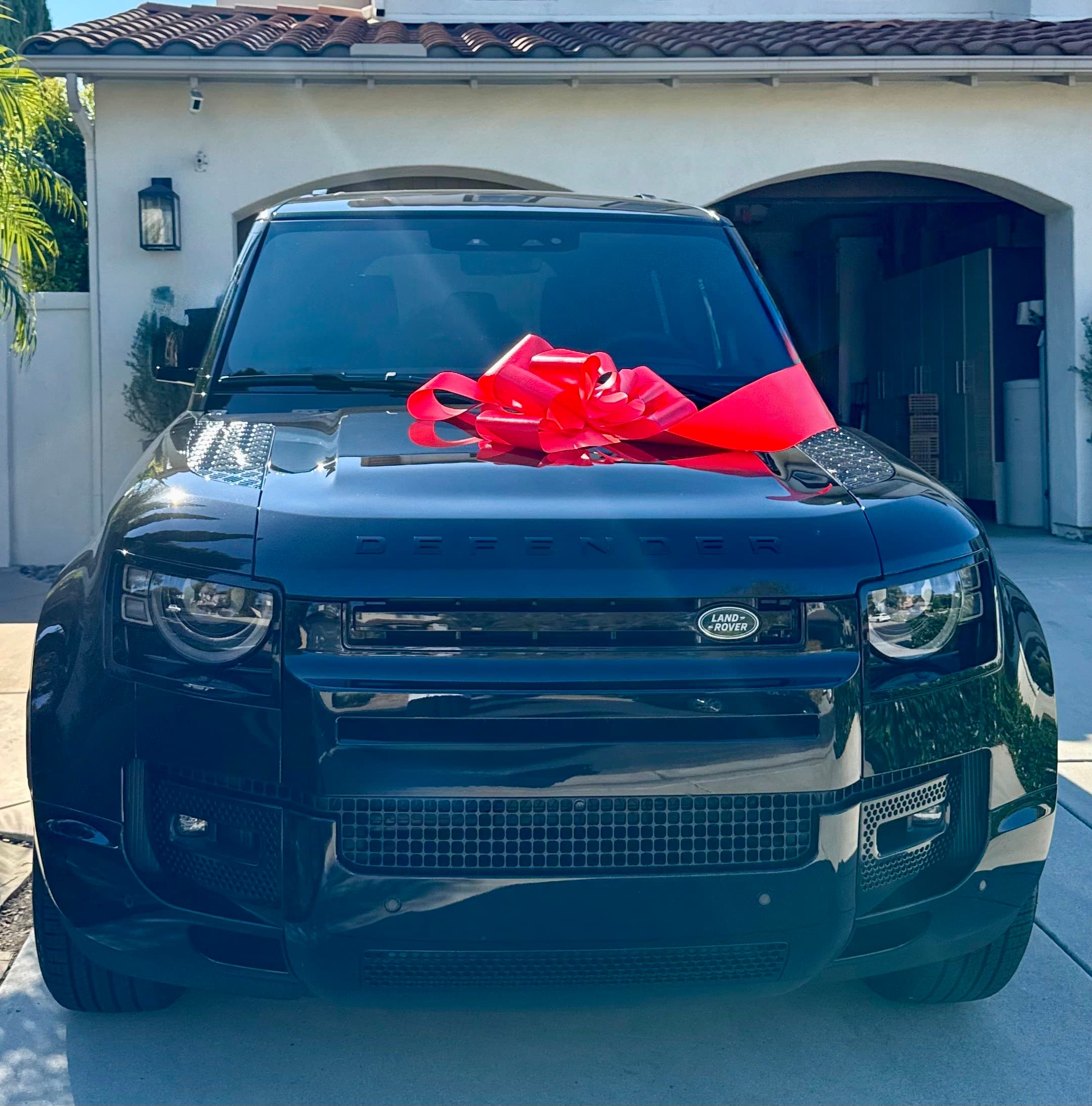
Examples include full-size pickup trucks such as the Ford F-150 and Chevy Silverado (most configurations), full-size SUVs such as the Chevrolet Suburban, Ford Expedition, GMC Yukon, and Cadillac Escalade, and certain heavy crossovers such as the Land Rover Defender and Lincoln Navigator. Some configurations of the Tesla Model X, Rivian R1S, and other larger EVs also exceed the threshold. GVWR must be confirmed on the specific vehicle and configuration, not assumed by model name.
What should a California real estate agent tell their CPA before acquiring a vehicle?
The most useful information: projected income for the year, the specific vehicle under consideration including its GVWR, whether the vehicle is US-assembled, whether the agent operates through a business entity, any planned real estate financing activity in the next two years, the registration city, and whether mileage is a constraint. With that information, a CPA can model the purchase and lease scenarios and identify which structure best fits the year.
What does CarOracle do, and how do real estate agents work with us?
CarOracle is a California-licensed auto broker providing buyer-side vehicle sourcing and transaction management. Once an agent and their CPA have determined the right acquisition structure, CarOracle sources the vehicle, negotiates terms, and manages the transaction through delivery. We serve agents across Los Angeles County, Orange County, the San Francisco Bay Area, Riverside County including Temecula and Murrieta, and San Diego County. The first step is a conversation about what your CPA has determined. We build from there.