CarMax and Carvana offer similar prices for most vehicles. The bigger question is whether either service is actually giving you the best number available, and the answer depends on which channel you use, not just which app you open first.
Most people selling a car pick one service, get a number, and decide whether to take it. At CarOracle, a California-licensed auto broker, we evaluate multiple channels on every vehicle we handle for clients. This article documents what that process looks like on a real vehicle, with real numbers.
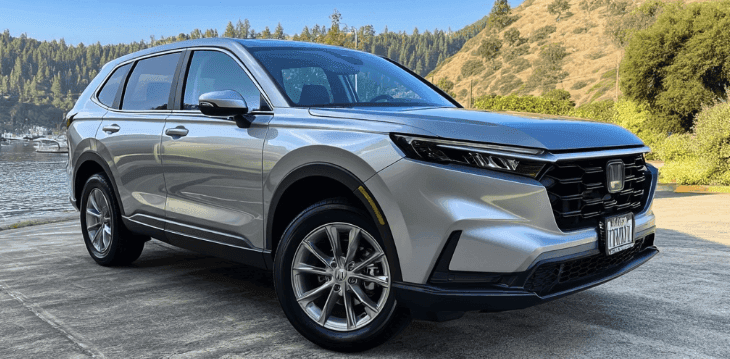
On April 13, 2026, we submitted a 2023 Honda CR-V EX-L AWD with approximately 53,000 miles, no accidents, and excellent condition to five services in a single session in the San Diego market. The same vehicle VIN was used across every platform to ensure consistent identification. The same mileage and condition inputs were applied throughout. Here are the results.
| Service | Offer |
|---|---|
| Driveo | $29,550 |
| AutoNation | $27,875 |
| KBB Trade-in Value | $26,440 |
| Carvana | $26,200 |
| CarMax | $26,000 |
All offers obtained April 13, 2026 via each platform's online appraisal tool, San Diego market. Vehicle: 2023 Honda CR-V EX-L AWD, approximately 53,000 miles, excellent condition, no accidents reported. A vehicle VIN was used for consistent identification across all platforms but is not published here. Offers are time-sensitive and will vary based on market conditions, location, and date submitted.
Total spread from lowest to highest firm offer: $3,550. On a vehicle worth roughly $26,000 at the algorithmic floor, that is a 13.7% variance depending solely on where you submit.
Most sellers never see this spread. They submit to one service, get a number, and treat it as the market. It is not.
Why the numbers cluster, and why some do not
Three of the five services, CarMax, Carvana, and KBB, landed within $440 of each other. That convergence is not a coincidence. These platforms generate offers through proprietary pricing algorithms that draw on a mix of wholesale auction data, their own retail transaction history, and real-time market inputs. The inputs differ across platforms, but the outputs converge because the underlying market data they reference reflects the same wholesale reality: what similar vehicles have recently sold for at auction.
AutoNation came in $1,875 above that cluster. Driveo came in $3,550 above it. We will not speculate on why. It could reflect local retail data, inventory positioning, or simply different margin expectations. What matters is that the spread exists and it is real money on the same vehicle submitted the same day. For context on how margin differs across these platforms, our earlier piece on Carvana and CarMax is worth reading.
The insight is not that some services are more generous than others. It is that different channels price the same vehicle differently because they have different business models, different inventory needs, and different relationships with market data. Knowing which channel to approach for which vehicle is the part most sellers never think about.
Not all services are the same type of buyer
Before you interpret any offer, you need to understand what kind of entity is actually making it.
Direct buyers
Direct buyers purchase the vehicle outright and cut the check. CarMax, Carvana, and AutoNation operate this way. The quoting entity and the paying entity are the same. Offers can still be adjusted at in-person inspection if condition does not match what was disclosed, but you know who you are dealing with from the start.
Driveo occupies a slightly different position. Driveo.com is a marketing and franchise platform: the actual buyer at each location is a participating local dealer who licenses the Driveo brand. The dealer conducts the appraisal, makes the final offer, and issues payment. From the seller's standpoint the transaction is still direct. But it is worth knowing the Driveo brand and the buying entity are not the same company.
Lead generators
Lead generators work differently. KBB Instant Cash Offer and CarGurus generate a figure to bring you to a participating dealer, who acts as the agent in the transaction. The model is designed to help dealers acquire used car inventory: the dealer can retain the vehicle or wholesale it through auction. You are not receiving an offer from the buying entity directly. You are receiving a platform-generated figure that a dealer will honor subject to their own inspection and process. Experiences vary. Keep that distinction in mind when comparing a KBB ICO number to an offer from a direct buyer.
Dealer auction platforms
Dealer auction platforms list your vehicle in a competitive auction where multiple dealers bid. The competitive environment can produce results above the algorithmic floor, particularly for vehicles with broad appeal. These platforms typically charge a fee, usually a few hundred dollars deducted from the sale price. For the right vehicle, that fee pays for itself. For vehicles with limited dealer appeal, direct dealer relationships often outperform the auction model.
The practical rule: know whether your offer is coming directly from the buyer, or through a platform intermediating the transaction.
Where the channel decision really matters
The CR-V experiment illustrates the spread on a common vehicle in a liquid market. Part of what makes this example particularly clean is the nature of Honda's model lineup. The 2023 CR-V EX-L is a standard-equipment vehicle: every EX-L comes with the same features because Honda does not offer option packages beyond the trim level. The VIN decodes to exactly what the car has, with no ambiguity. That consistency made it possible to enter identical inputs across every platform.
Many other makes are not as straightforward. A comparable BMW or Mercedes can have widely varying equipment on the same trim, making algorithmic pricing less precise and appraisal judgment more consequential. That the CR-V still produced a $3,550 spread on a vehicle where every data input was identical and unambiguous makes the result more notable, not less.
The channel question becomes more consequential, and harder to answer, when the vehicle is less common.
We recently helped a client selling a European luxury sedan before transitioning into a new vehicle. The results across channels were stark: one national buying service offered $13,500. Another came in at $10,000. Brand dealers for the make he was purchasing quoted $9,000. Dealers for the brand he was selling would not engage at all. The gap between the best and worst outcome was $4,500. A similar pattern appeared on a five-year-old BMW X5 we handled separately. The spread across channels again approached $4,000. In both cases, the right answer was not running the same five services. It was knowing which two or three channels were actually positioned to compete for that specific vehicle on that specific day.
Reliability is part of the equation
A high offer from an unreliable channel is not a high offer. It is a starting point that may or may not hold.
When evaluating where to sell, the offer amount is one input. The others are whether the service will honor the offer at handoff, how quickly payment is made, and how much friction the process involves. Before committing to any service, check their reviews. Look specifically for how often sellers describe the final outcome matching the initial quote, and how payment was handled. The gap between a strong offer and a clean close is where real experiences diverge from headline promises.
When we manage a vehicle sale as part of a broader acquisition, we weigh all three factors: offer amount, channel reliability, and process friction. The goal is the best net outcome, not the best headline number.
The practical takeaway
Before you accept any offer on your vehicle, run at least three channels. For a common vehicle, CarMax and Carvana will establish your floor quickly. Then seek at least one offer from a dealer with direct retail interest in that model. The difference between the floor and the ceiling is real money, and on most vehicles it takes less than an hour to find it.
For luxury vehicles, high-mileage vehicles, or models with narrow buyer pools, the channel question requires more judgment. The services that perform on a Honda do not necessarily perform on a BMW or a Jaguar. In those cases, access to specific dealer relationships and knowledge of which channels are actively acquiring that type of vehicle matters more than running any combination of platforms.
The first offer you receive is a data point. Treat it as one.
If you are approaching a vehicle purchase or lease and want this kind of channel evaluation handled before you negotiate anything, that is exactly what CarOracle provides. We are a California-licensed auto broker representing buyers.
Frequently asked questions
Is CarMax or Carvana better for selling your car?
For most common vehicles in good condition, CarMax and Carvana offer similar prices because both platforms price off the same wholesale benchmark data. In our April 2026 test on a 2023 Honda CR-V EX-L AWD, CarMax offered $26,000 and Carvana offered $26,200, a $200 difference. Neither is consistently better. The more useful question is whether either represents the ceiling for your specific vehicle, and in our test, neither did.
Where can I get the most money for my car?
The answer depends on the vehicle. For common models like a Honda CR-V or Toyota RAV4, running three to four services in under an hour will surface the spread. In our test, the spread between CarMax and the highest firm offer was $3,550 on a $26,000 vehicle. For luxury or less-liquid vehicles, the right channel requires more judgment and direct dealer relationships that most online platforms cannot replicate.
What is the KBB Instant Cash Offer and how does it work?
The KBB Instant Cash Offer is a lead generation tool, not a direct purchase offer. KBB generates a figure based on your vehicle's details and routes you to a participating dealer who acts as the agent in the transaction. The dealer may adjust the offer based on their in-person condition assessment. It is a useful benchmark but should not be compared directly to offers from direct buyers like CarMax or Carvana, where the platform quoting and the entity paying are the same.
Does getting multiple offers take a long time?
For common vehicles, no. CarMax and Carvana both return offers in under ten minutes using a VIN. Running three to four services takes roughly thirty to forty-five minutes and can meaningfully change your outcome.
When does a dealer auction platform make sense for selling a car?
A dealer auction platform, where multiple buyers compete for your vehicle in a structured bidding process, tends to perform best on clean, common vehicles with broad dealer appeal. The fee structure, typically a few hundred dollars deducted from the sale price, is most justifiable when competitive bidding is likely to produce offers meaningfully above the algorithmic floor. For less-liquid vehicles, direct dealer relationships often outperform the auction model.
How does CarOracle handle vehicle sales on behalf of clients?
The seller gets a better net outcome because the two decisions, what to sell for and what to buy, are not negotiated in the same room. When we manage a vehicle acquisition, we evaluate the trade or sale as a standalone transaction before any dealer contact on the purchase side. We identify the right channel based on the vehicle's make, condition, and market demand, obtain competing offers, and factor in reliability alongside the offer amount. On a common vehicle that process usually takes less than a day. On a luxury or less-liquid vehicle, it requires specific dealer relationships that most sellers do not have access to on their own. Either way, the client is not accepting the first number a platform returns. That distinction, across deal after deal, is where the outcome changes.