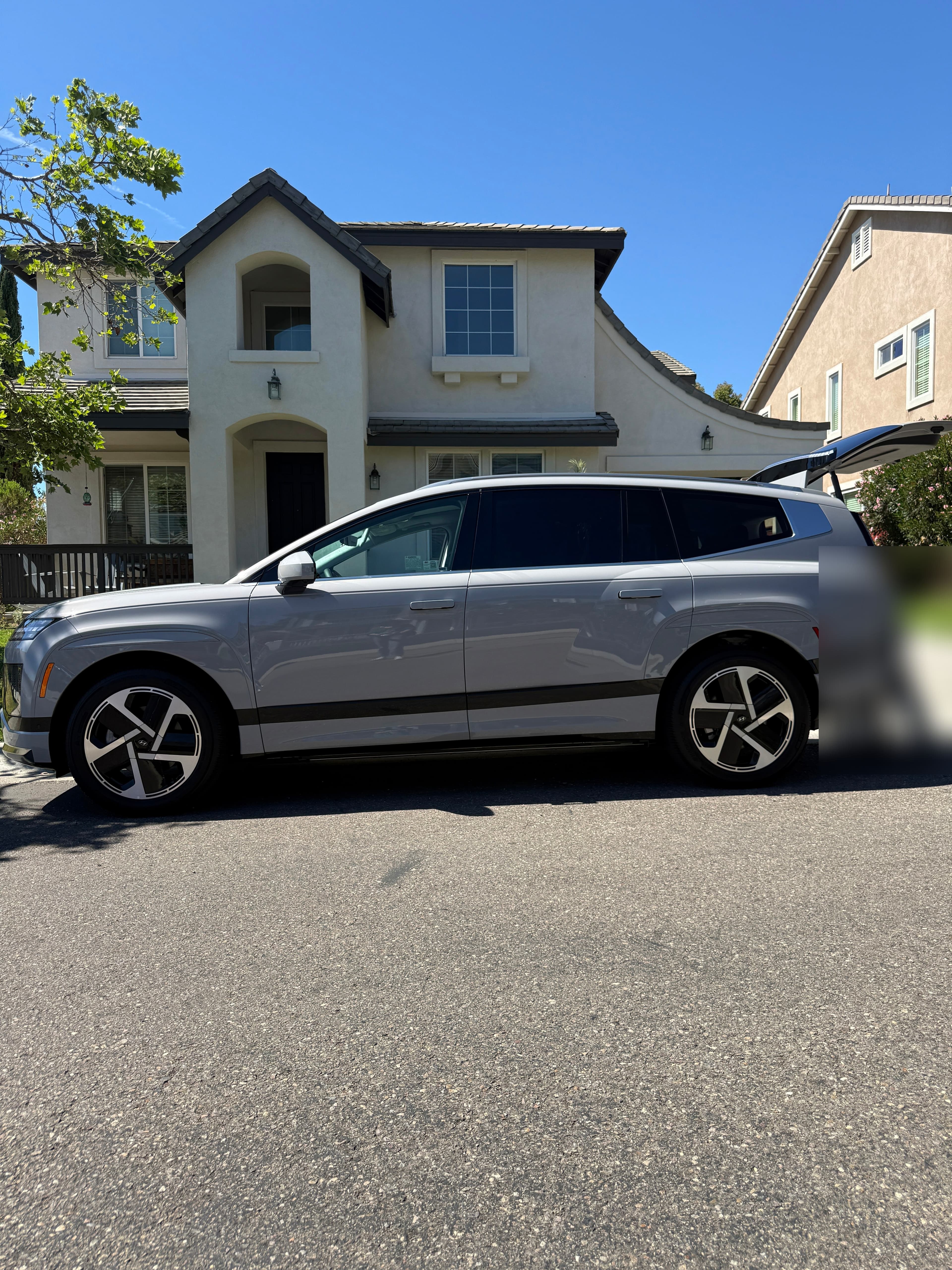
A client came to us recently who was, on paper, a near-perfect EV candidate. She drives mostly around town. She takes one or two longer trips a year, but the vast majority of her miles are predictable, local, and short. We went through the numbers. An EV made sense.
She was not interested. A few months earlier, she had been in a friend's electric car on a road trip when they had to wait for a charging station to open up. It added an hour or two to the drive. That experience ended the conversation.

We see the other version too. A buyer who purchased an EV without access to home charging. He was fueling almost entirely at public commercial chargers, paying rates that, depending on the network and time of day, were running him as much or more than gasoline would have. He came to us wanting to get out and into a hybrid.
Both situations point to the same thing. The question of whether to buy an EV in 2026 is not really a market question. It starts as a practical one: does your life actually fit the ownership model? That answer has to come before you look at incentives, inventory, or price.
But the market question matters too, because the California EV landscape shifted materially in the past year, and most of what buyers think they know about EV deals is based on a market that no longer exists.
The Home Charging Prerequisite
Before anything else, one variable determines whether an EV makes financial and practical sense: access to overnight Level 2 charging at your residence.
This is not a minor logistical detail. It is the foundation the entire ownership model rests on. A buyer with a 240-volt outlet in their garage or a dedicated charging setup at their building charges overnight, starts each day with a full battery, and rarely if ever thinks about charging. The experience is closer to a smartphone than a gasoline vehicle.
A buyer without that access charges on the public commercial network, where rates vary by provider, time of day, and demand. Depending on the network, those rates can run as high or higher than the per-mile cost of gasoline. The convenience advantage disappears, and the cost advantage often disappears with it.
This dynamic also explains why the used EV market has not attracted the enthusiasm the depreciation numbers alone might suggest. A used BMW iX or Audi e-tron at a fraction of its original transaction price looks compelling on a spreadsheet. But for a buyer who rents, lives in a multi-unit building, or parks on the street, the charging reality may make that vehicle impractical regardless of price.
The same logic applies to first cars for college students or young adults. A used EV is often an excellent value proposition on paper: low acquisition cost, minimal maintenance, battery under warranty. But if the buyer will be charging on a college campus, in an apartment complex, or at a rented home where outlet access is not guaranteed, the math does not hold. The vehicle that looks like a bargain becomes a source of daily friction.
The straightforward version: EVs make sense when the buyer has access to overnight charging at their own residence. Without it, a hybrid almost always serves them better regardless of what the incentives look like.
What Changed in 2026
The California EV market in 2022 and 2023 was structured around two things that have since changed: the federal $7,500 tax credit flowing through lease transactions, and manufacturer finance companies setting residual values for EVs at levels that made monthly lease payments artificially attractive.
Both are gone.
The federal EV tax credit is gone. The One Big Beautiful Bill Act, signed on July 4, 2025, ended the $7,500 credit for new clean vehicles, the used clean vehicle credit, and the commercial clean vehicle credit that captive lenders had been passing through on leases. All three stopped applying to vehicles acquired after September 30, 2025, according to the IRS. That is a termination and not a narrowing. There is no income cap to fall under and no assembly requirement to meet, because there is nothing left to qualify for.
California's original statewide rebate, the Clean Vehicle Rebate Project, closed to new applications on November 8, 2023. In August 2026 the state replaced it with something narrower: MyFirstEV, a point-of-sale incentive limited to first-time buyers and lessees of zero-emission vehicles. The details are below.
At the same time, EV residual values have corrected. Manufacturer finance companies set residuals high in 2022 and 2023, partly to stimulate adoption and partly in anticipation of EV values holding better than they have. They did not hold. Used EV values on a number of models fell sharply, and captive lenders adjusted their residual assumptions accordingly. That correction made new EV lease payments higher than buyers expected, even before accounting for the loss of the federal credit structure.
The result shows up in market data. According to the California New Car Dealers Association Q1 2026 Auto Outlook, California's ZEV market share fell to 13.7% in the first quarter of 2026, down from 21.0% for full-year 2025 and from a 22.0% peak in 2024. Total ZEV registrations declined 40.2% compared with Q1 2025. That is not a seasonal fluctuation. It reflects the credit changes, a pull-forward effect that brought buyers in ahead of the federal credit expiration, and genuine softening in demand.
Manufacturers responded the way they usually do when demand softens: with incentives. Some reduced MSRPs. Some added cash on the hood. Some did both. The result is that new EV deals in 2026 are real, but they are structured as purchase incentives rather than lease incentives. That is a meaningful distinction for how you should be shopping.
California's MyFirstEV Incentive
California's MyFirstEV program takes $3,500 off a new zero-emission vehicle and $1,750 off a used one for people buying or leasing their first. The state and the participating manufacturer each fund half, according to the California Air Resources Board. The dealer applies the discount at the point of sale, so it should appear as a line on the purchase or lease agreement before you sign. There is no application afterward, and it is not retroactive: a vehicle ordered or bought before its manufacturer began offering the incentive does not qualify.
The eligibility rules are narrower than the old rebate's:
- First zero-emission vehicle only. Anyone who has been on the registration or title of a battery electric or fuel cell vehicle, in any state, is ineligible, and each person can use the incentive once.
- Battery electric and fuel cell vehicles only. Plug-in hybrids do not qualify.
- Price and age limits. A new vehicle must be model year 2026 or newer with an MSRP of $50,000 or less. A used vehicle must sell for $25,000 or less, be at least two model years old, and be a manufacturer certified pre-owned vehicle sold through a franchised dealer. Manufacturers headquartered in California that build only zero-emission vehicles are exempt from both caps.
- Purchase or lease. Both qualify, and the vehicle must be registered in California.
- A signed attestation. The buyer signs a statement of first-time status at the time of sale.
Availability is set manufacturer by manufacturer and lasts only while each one's share of the funding does. As of its September 25, 2026 update, CARB lists sixteen manufacturers: most offer the incentive on new vehicles only, Ford, Lucid, Rivian and Volvo offer it on new and used, Mitsubishi starts in November 2026, and Tesla's allocation has run out. The state's share is a one-time appropriation of $135.5 million. The list moves, so check it before you shop.
Of the brands discussed below, Hyundai and Kia participate; BMW, Audi and Volkswagen are not on the list. In practice the incentive changes the math on a first EV under $50,000 from a participating brand and does nothing for a used luxury EV.
Income-qualified households can still use Clean Cars 4 All and the Driving Clean Assistance Program, and CARB allows both to stack with MyFirstEV.
Where the Value Is Right Now
We work with clients on EV transactions across brands, including BMW, Hyundai, Kia, Mercedes, Acura, and Porsche. What we are seeing in mid-2026 is concentrated in a few specific areas.
Hyundai and Kia on the new side. Both brands have been aggressive. The Ioniq 9 has carried significant manufacturer incentives in recent months as Hyundai works to build volume on a new model. Kia reduced the MSRP on the EV6 year over year and has been active with additional cash incentives to stimulate demand. These are purchase plays, not lease plays, and the incentive stacks are real. Programs change month to month, which is why we verify current terms before any client commits.
BMW i4 on the new side. BMW has continued to support the i4 with meaningful programs. It sits in a segment where the buyer profile, performance-oriented, brand-conscious, shorter ownership cycles, maps well onto EV ownership, and BMW has priced accordingly.
VW ID.Buzz on the new side, with context. There are 2025 ID.Buzz units sitting on lots. Volkswagen did not produce a 2026 model, and the 2027 is not yet in market, which means dealers have aging inventory and motivation to move it. Range is a legitimate limitation, and buyers should go in with clear eyes on that. But for a California buyer whose primary use is around town and who values the vehicle's character and interior flexibility, the discount available on a sitting unit is worth evaluating.
BMW iX and Audi e-tron on the used side. These two models represent the clearest value case in the used EV market right now. Both depreciated significantly from their original transaction prices. The buyer who comes in today gets an asset at a fraction of what the original owner paid, and still has the benefit of the 8-year, 100,000-mile battery warranty that covers the primary financial risk in EV ownership. These are still BMW and Audi vehicles, so the buyer profile still needs to match. But for someone who was already considering a used luxury vehicle, with home charging in place, the math on a used iX or e-tron deserves a serious look.
One due diligence flag on used EVs. Fast-charging history matters. A battery that has been charged primarily on DC fast chargers, rather than Level 2 home charging, degrades faster. Any used EV purchase should include a battery health check as part of the evaluation. This is not a reason to avoid used EVs. It is a reason to evaluate them properly.
Leasing in 2026
Leasing is not off the table, but the math is different than it was, and buyers who approach it expecting 2022 or 2023 outcomes are going to be disappointed.
The programs that made EV leases extraordinary two years ago, suppressed money factors and inflated residuals, are largely gone, and the federal credit pass-through ended outright on September 30, 2025. According to Experian's State of the Automotive Finance Market Q4 2025, the average new vehicle lease payment across all segments is $613 per month. EV lease payments have moved closer to that average as the structural subsidies that once pushed them below it have unwound. What remains is manufacturer support where brands are still motivated to move specific models. Those programs exist, they change monthly, and they are worth evaluating case by case. The right question is not "should I lease an EV" but rather "what is the current money factor and residual on this specific model, and does the lease structure make sense relative to buying it outright." For more on how lease structure and residual values work, the California Car Lease-End Guide covers the underlying mechanics in detail.
The Hybrid Reality
Most people asking this question are going to end up in a hybrid. That is not a criticism. It is an observation based on what we hear in consultations every week.
Range anxiety is real, even when the math does not fully support it. A buyer who drives 35 miles a day and takes two road trips a year has very little practical exposure to range limitations. But if they have ever been in a situation, or heard about one, where someone had to wait for a charging station or reroute around charging availability, that experience tends to override the math. People want to be able to get in their car and go without managing logistics. That is a legitimate preference, not an irrational one, and no amount of data changes it for most buyers.
The buyer who should genuinely reconsider their hybrid default is the one who has reliable home charging access, predictable daily mileage, and is willing to plan longer trips the same way they plan flights: with a small amount of advance thought rather than none. For that buyer, the current incentive environment on new EVs makes the conversation worth having seriously.
The Decision Framework
Before looking at models or incentives, answer these three questions:
Do you have access to Level 2 home charging at your residence? If not, the ownership model is likely to cost more and feel more constrained than you expect. This is the single most important variable. It is not insurmountable, but it needs to be resolved before anything else.
What does your actual driving look like? Not your worst week. Not your two annual road trips. Your normal week. If most of your miles are local and predictable, an EV fits the pattern. If your driving is irregular, long-distance, or unpredictable, a hybrid is likely a better match regardless of what the incentives look like.
Are you buying or leasing? The value case in 2026 is strongest on the purchase side for new EVs, where OEM incentives are real and structured around moving inventory. Leasing still works on specific models with current manufacturer support, but it requires verifying current terms rather than assuming the programs from a year or two ago are still in place.
How CarOracle Can Help
CarOracle is a California-licensed auto broker (License #43082) representing buyers across San Diego, Orange County, Los Angeles, Riverside County, the Bay Area, and Sacramento. We work with buyers on EV and hybrid transactions and verify current manufacturer incentive terms before any client makes a commitment. That includes money factors and residuals on leases, cash incentive stacks on purchases, and battery health evaluation criteria on used transactions.
If you are working through the EV-versus-hybrid question and want a straight read on what is available right now, schedule a consultation. The conversation is complimentary and carries no obligation.