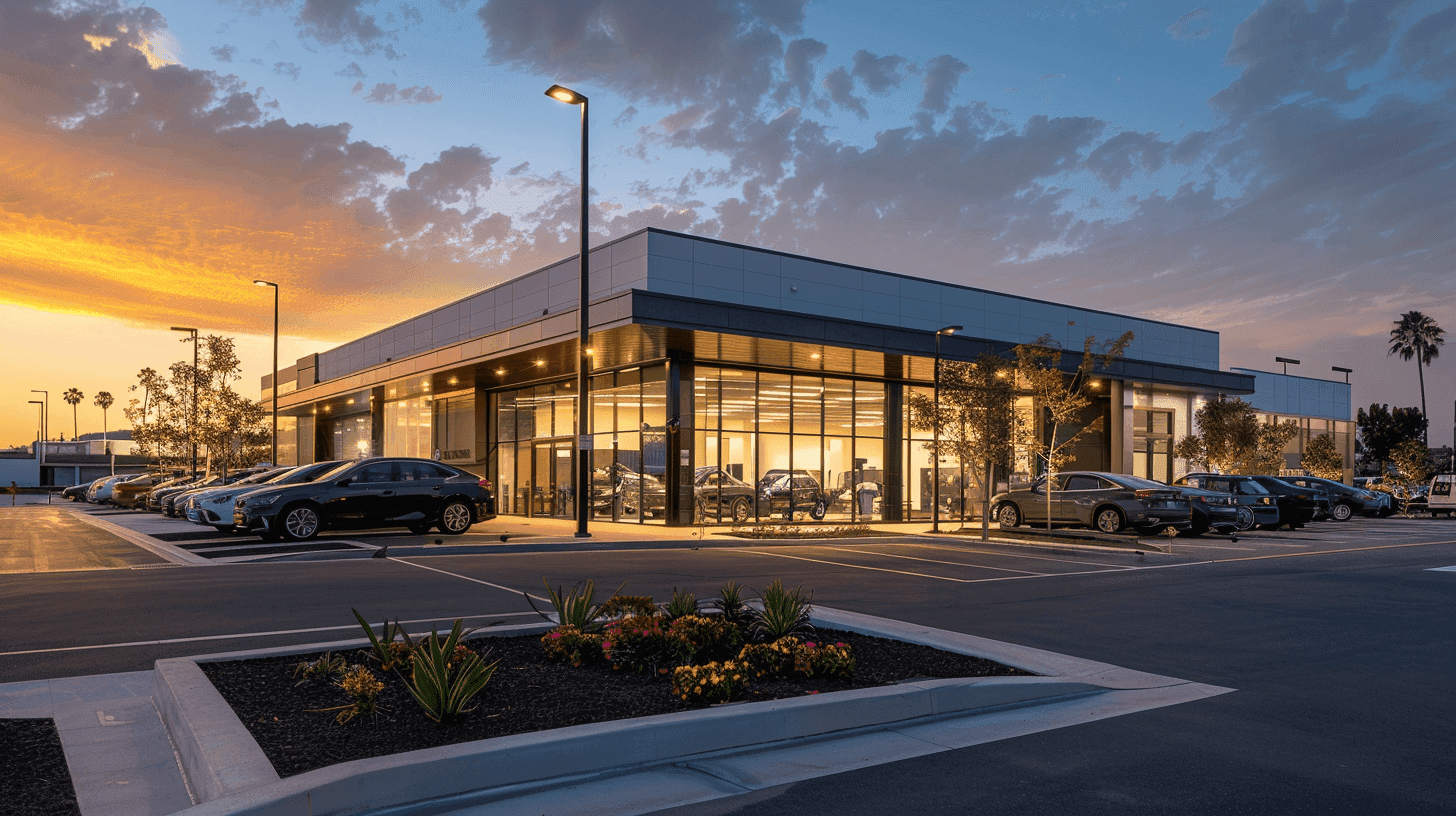
You find a vehicle online. The price looks right. You call the dealer, confirm availability, and make the trip. Then, somewhere between the test drive and the finance office, you learn the car has already been fitted with a paint sealant package, an interior fabric protectant, door edge guards, and a dealer-installed security system. The products are pre-installed. The price, which was never discussed in the original listing, runs between $800 and $2,900.
This is not an unusual experience. It happens across California and across the country. Dealers install these products before the vehicle reaches the sales floor because the margins are high and, in a market where vehicle prices are compressed by competition, pre-installed add-ons help restore gross per unit. The practice is rational from the dealer’s perspective. From the buyer’s perspective, it means the price that drew them to the vehicle is not the price they are being asked to pay.
California’s Combating Auto Retail Scams Act, known as the CARS Act and enacted as SB 766, addresses this directly. Signed into law in October 2025 and operative beginning October 1, 2026, the Act requires California dealers to disclose a true total price in all advertising and in every initial written communication with a prospective buyer. That total price must include any pre-installed add-ons and any dealer-applied market adjustments. It cannot be a number the dealer uses to get a buyer through the door and then revises at the point of sale.
This is sensible market policy. Greater pricing parity at the point of first contact benefits buyers and dealers alike. It reduces wasted time on transactions that cannot close at the terms that initiated them, and it rewards dealers who were already operating transparently. CarOracle’s position is straightforward: the CARS Act addresses a real inefficiency in how vehicles are advertised and sold, and California car buyers will be better off for it.
The more useful question is what the Act does not do, and where the car buying decision still requires something the law was never designed to provide.
The Federal Rule That Never Took Effect
California did not create these protections in a vacuum. It stepped in where federal rulemaking failed.
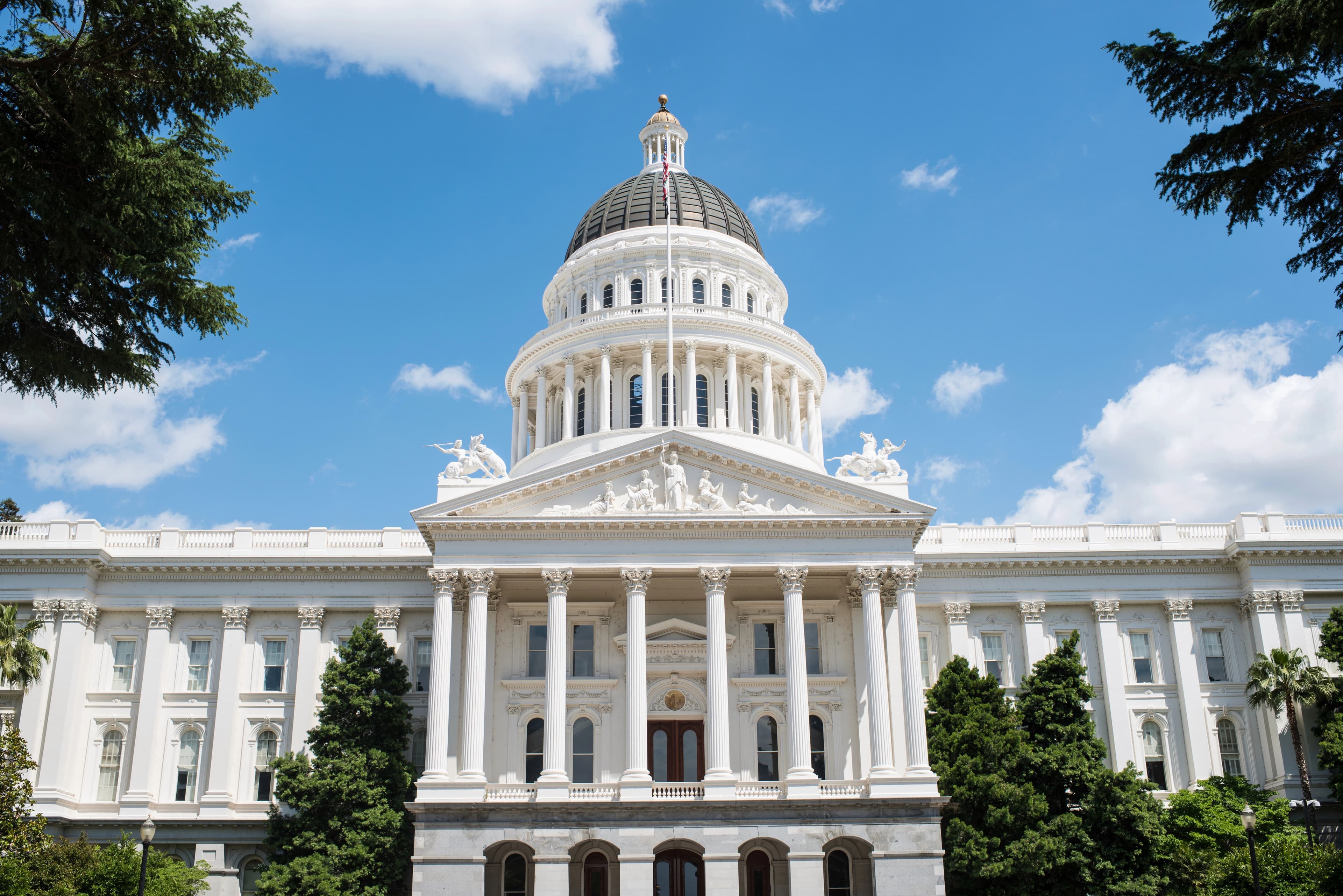
The Federal Trade Commission published its own Combating Auto Retail Scams Rule in December 2023, with the same general intent: require dealers to disclose a true total price, prohibit junk add-ons, and eliminate bait-and-switch advertising nationwide. The National Automobile Dealers Association challenged it in federal court almost immediately.
On January 27, 2025, the Fifth Circuit Court of Appeals vacated the FTC’s CARS Rule in a 2-1 decision, finding that the FTC had failed to issue an advance notice of proposed rulemaking before drafting the regulation, a procedural requirement under the FTC Act. The court did not evaluate whether the rule’s consumer protections were warranted. It struck the rule on process grounds before it could take effect. As of mid-2026, the FTC has not appealed.
The result is that buyers in most other states have none of the pricing transparency protections the federal rule would have provided. California’s SB 766 mirrors the substance of what the federal rule required and adds California-specific provisions on top of it. The federal rulemaking process, which incorporated more than 100,000 consumer complaints over years of development, informed what ultimately became California law.
That context matters. The CARS Act is not a routine state consumer protection measure. It is a substantive regulatory framework whose provisions were developed and refined through a federal process, then enacted at the state level after that process was struck down. California car buyers in 2026 have protections that no other state currently provides.

California’s Structural Advantages as a Car-Buying Market
Before examining the CARS Act specifically, it is worth understanding the market it operates in, because California is already among the better states in the country for a buyer to transact.
The state is the largest new-vehicle market in the United States. The density of competing franchise dealerships across San Diego, Los Angeles, Orange County, and the Bay Area creates genuine downward pressure on margin in ways that smaller, less competitive markets do not. A buyer in Carlsbad or Irvine has more negotiating leverage by virtue of geography than a buyer in a mid-sized market with two or three competing stores.
California also caps dealer documentation fees at $85 for dealers participating in the DMV business partner automation program, and $70 for those that do not, with a $33 DMV electronic filing fee and a $1.75 per-tire fee on top. That totals roughly $125 in fixed, non-negotiable, state-mandated transaction costs on a standard purchase, none of which are dealer-controlled. That cap was actively defended as recently as October 2025, when the California legislature passed SB 791, which would have raised the documentation fee to 1% of the vehicle price, capped at $260. Governor Newsom vetoed it, stating that the increase was not justified and would place an undue burden on Californians already facing high living costs. The existing cap remains in effect for 2026.
The contrast with other major markets is significant:
| State | Documentation Fee | Cap Structure |
|---|---|---|
| California | $85 | Hard statutory cap |
| Arizona | $499 avg. | No cap |
| Texas | $225 safe harbor | Soft cap; dealers may exceed with OCCC cost justification |
| Florida | Varies; no statewide figure published | No cap |
| Virginia | $899 avg. | No cap |
Florida and Texas illustrate the range of outcomes in uncapped markets. Florida sets no cap on documentation fees. Texas established a $225 safe harbor through the Office of Consumer Credit Commissioner in July 2024, but high-volume luxury dealerships regularly exceed it, and documentation fees of $800 or more on a single transaction are documented in the market, as we have seen firsthand when helping clients source vehicles there.
California’s sales tax structure is where the buyer-friendly advantages reverse. Combined rates, per the California Department of Tax and Fee Administration, vary significantly by county and municipality. Lancaster and Palmdale carry the highest combined rates in Los Angeles County at 11.25%. The 10.25% rate commonly cited for Los Angeles County applies to many incorporated cities but understates what buyers in higher-rate cities actually pay at registration. Buyers in San Diego County see rates up to 8.75% depending on the city. Orange County municipalities including Irvine and Newport Beach run 7.75% to 8.75%. The documentation fee advantage is real. The sales tax exposure is equally real, and it affects how the total out-the-door cost compares across regions.
Finally, California maintains a licensing framework for auto brokers that most states do not. To represent a buyer in a vehicle transaction in California, a broker must hold a dealer license with an auto-broker endorsement. That licensing requirement creates a regulated, accountable profession with a defined statutory obligation to the buyer. California Vehicle Code Section 11735(e) governs that obligation. Most states have no equivalent structure.
The CARS Act is the newest layer in a consumer protection infrastructure that already made California a relatively buyer-friendly environment. It belongs in that context.
What the CARS Act Requires Starting October 1, 2026
The Act, codified at Title 1.5B of the California Civil Code beginning at Section 1784.20, imposes five core requirements on California-licensed dealers selling light-duty vehicles.
Total price disclosure. The advertised total price for any specific vehicle must include all mandatory charges, any pre-installed add-ons, and any dealer-applied price adjustments. It must appear in every advertisement and in the first written communication between a dealer and a prospective buyer about a specific vehicle. The dealer must honor that price. It cannot be a floor that rises once the buyer arrives.
Prohibition on undisclosed add-ons. Dealers may not charge for products or services the buyer did not request and agree to in writing. Products that provide no documentable benefit to the specific buyer are prohibited outright. The legislative record names specific examples: oil change packages sold with electric vehicles, nitrogen tire programs where purity falls below 95%, service contracts voided by pre-existing conditions such as prior flood or collision damage, and catalytic converter protection products installed on vehicles that do not have catalytic converters. These are not hypothetical edge cases. They appear in the legislative record because they have appeared consistently enough in California dealerships to warrant explicit prohibition.
Payment packing disclosure. When a dealer presents a written comparison of different monthly payment options, the dealer must include a statement that lower monthly payments often increase the total amount the buyer will pay over the life of the loan or lease. This provision targets a specific tactic: stretching loan terms or burying rate markups behind a monthly payment figure that obscures total cost. The disclosure does not prevent a dealer from presenting payment options. It requires the total cost context to appear alongside them in writing.
Three-day right to cancel on used vehicles. Buyers of used vehicles priced at $50,000 or under receive a mandatory three-day right to cancel the purchase. The restocking fee is capped at 1.5% of the sale price, with a $200 minimum and $600 maximum. The vehicle must not have been driven more than 400 miles from the point of purchase. This right is automatic and free at the point of signing, replacing California’s prior Contract Cancellation Option Agreement, under which dealers could charge a tiered upfront fee, scaled to vehicle price, simply to purchase the option to return.
Misrepresentation prohibitions. Dealers may not misrepresent financing terms, monthly payments, lease structure, or the nature of a contract. This applies to both purchases and leases.
What the Act does not cover. The law applies to consumer retail sales and leases of light-duty vehicles by California-licensed dealers. It does not apply to heavy-duty commercial vehicles with a Gross Vehicle Weight Rating above 10,000 pounds, to fleet or wholesale transactions, or to used vehicles purchased at public or dealer auction. Buyers transacting outside those channels do not have the protections the CARS Act provides.
These are real protections. The total price disclosure requirement alone closes the gap that generates the kind of buyer experience described at the opening of this article. Buyers who engage with a California dealer after October 1, 2026 should find that the number in the advertisement is the number on the contract, adjusted only for taxes, registration, and the fixed state fees described above. Those two items are specifically excluded from the total price the CARS Act requires dealers to disclose, which matters more in California than in most states given the rate structure.
Deposits, Factory Orders, and a Right You Already Have
One provision has drawn almost no coverage, and it clarifies a right that already existed.
The CARS Act makes it a violation for a dealer to misrepresent whether it will keep a cash downpayment if the transaction is not finalized. That does not create a new refund right. It makes misrepresenting the existing one an enforceable violation.
The underlying right is older. California's Automobile Sales Finance Act provides that any payment made by a buyer to a seller pending execution of a conditional sale contract shall be refunded if the contract is not executed. A deposit on a factory order is exactly that: money paid while a contract is pending. If you walk away before signing and taking delivery, it comes back.
Contract language to the contrary does not survive. A “non-refundable deposit” clause on a retail vehicle order runs against that refund rule directly and against the Civil Code's limit on liquidated damages, which voids such provisions in consumer retail contracts unless actual damages would be impracticable to determine. When a dealer keeps a saleable vehicle, damages are calculable. The clause is unenforceable.
This matters most on factory orders, where the wait can run six to eight weeks on one model and six months or more on another. A dealer placing a custom order is spending one of its allocation slots, which is one less vehicle for its own inventory, and it is doing so on a build the manufacturer would not otherwise have produced. When a buyer walks after four months, the dealer is left with a vehicle configured for someone else’s taste. Worth knowing separately: California law caps a broker’s deposit at 2.5 percent of the selling price, with no equivalent cap applying to a selling dealer.
What the Law Was Never Designed to Do
The CARS Act governs what dealers say about price. It was not designed to help buyers make the underlying decision, and it does not.
Choosing the right vehicle. Within any given segment, a buyer faces real trade-offs between makes, trim levels, model years, powertrain choices, certified pre-owned versus new, and inventory timing. The Cox Automotive 2025 Car Buyer Journey Study found that the average buyer spends more than 13 hours researching and completing a vehicle purchase. The CARS Act reduces the chance that a portion of that time is wasted on a transaction that cannot close at the advertised price. It does not reduce the underlying complexity of the decision itself. Knowing the accurate price of the wrong vehicle is not an advantage.
Lease versus loan structure. The CARS Act requires that whatever terms are quoted be accurately disclosed. It does not help a buyer determine whether leasing or purchasing is the better structure for their situation, what a competitive money factor looks like for a given vehicle and month, how multiple security deposits affect the effective rate, how mileage should be structured to avoid end-of-lease exposure, or what residual value benchmark separates a strong lease from a weak one. These are financial decisions that require context the law does not provide. For a closer look at how lease structure affects total cost in California, the CarOracle Lease vs. Buy Guide and our OEM Captive Lender Guide cover both in detail.
The decision-making process itself. Most buyers arrive at a vehicle purchase with incomplete information about what they actually need, what the market looks like for that specific vehicle at this specific moment, and which dealers are positioned to move at competitive terms. That is experiential knowledge accumulated across many transactions. It is not available in a price disclosure.
The Dealer Relationship That Disclosure Cannot Replicate
One question we hear regularly from prospective clients: I found this car at this dealer, can you just negotiate it for me?
The honest answer is: we will look at it, but not every dealer is one we will do business with, and that judgment does not change after the CARS Act takes effect.
The law will make advertised prices more accurate. It will not change how a dealer operates when margin is under pressure, or how a dealer’s finance office structures a product presentation, or how a dealer responds when a buyer is sitting in the chair and the clock is running. Dealers who were adding undisclosed products at the eleventh hour will find other ways to protect gross. That is not a criticism of the industry. It is a straightforward observation about how any business responds to a compliance constraint. Regulatory floors shift behavior at the margin. They do not change the underlying character of how a business operates.
Working with CarOracle means working with dealers we have vetted through repeated transactions. When a dealer does business with a client CarOracle has placed, they know we are not a one-time buyer. We represent ongoing volume across a roster of clients, and we can shift that volume when a dealer’s conduct warrants it. That dynamic does not exist in a consumer-to-dealer transaction, regardless of how accurately the dealer has disclosed its prices. A buyer is one transaction. CarOracle is a relationship the dealer has reason to maintain.
This does not mean we decline unfamiliar dealers reflexively. There are dealers we have not worked with yet, and some of them earn our confidence quickly. But it means we approach every transaction with knowledge of the market that a buyer transacting once every three or four years cannot reasonably accumulate. For more on how California auto brokerage works and what the licensing framework requires, see What Is an Auto Broker and Why Should You Use One. For buyers who want to understand how to approach a transaction without negotiating directly, our guide to buying a car without negotiating in California covers the options in detail.
The Representation Parallel
Consider two other markets where pricing is known and disclosure is regulated, and where buyers nonetheless choose professional representation as a matter of course.
Insurance. Carriers file their rates. Comparison tools exist and are widely used. A buyer can access pricing across multiple providers without speaking to anyone. And yet most consumers choose to work with an agent or broker, not because they cannot find a price, but because the agent’s value is in understanding the buyer’s exposure, matching coverage to need, and providing counsel across a marketplace of available products. Transparent pricing did not eliminate that role. It clarified it.
Real estate. Listing prices are public. Comparable sales are accessible. A buyer can spend months on Zillow and Redfin before speaking to anyone. Nearly every buyer still engages representation for the transaction itself, because the agent’s value is not access to price data. It is knowledge of the market, judgment about terms, and an obligation that runs to the buyer. Disclosure laws in real estate have not changed that calculus, because disclosure and representation are different things.
California auto brokerage operates in the same category. Under California Vehicle Code Section 11735(e), a California-licensed auto broker owes a fiduciary duty of utmost care, integrity, honesty, and loyalty to the party it represents. In a CarOracle engagement, that party is the buyer. That obligation exists independently of anything a dealer is required to say in its advertising. Knowing the accurate price is the beginning of a transaction. Knowing whether to proceed, with which dealer, under which terms, in which structure, is the work that follows. For a full overview of how licensed auto brokerage is structured in California and how to evaluate your options, see the 2026 California Guide to Auto Buying Services and Auto Brokers.

The Three-Day Return, and What It Actually Covers
The right to cancel a used vehicle purchase within three days has drawn most of the coverage this law has received. It is a real protection, and California is the first state to require it. The details are worth getting right, because several published summaries have them wrong.
Calendar days, not business days. The cancellation period ends no earlier than the dealer’s close of business on the third calendar day. Buy on a Monday and the right expires at close of business Thursday. An earlier draft of SB 766 said three business days and set the price threshold at $48,000. The enacted version says calendar days and $50,000. Summaries citing business days are quoting a version that never became law.
You return the vehicle yourself, in person. The statute requires personal delivery to the selling dealer during business hours. Not a sister store. We do not expect dealers to send someone to collect the vehicle. The labor, the liability of moving a car they no longer have a contract on, and the cost of retrieving an employee all fall on the dealer, and none of it is reimbursed. The process is also new, and the paperwork does not exist yet in most stores.
Mileage is capped twice. Above 400 miles the right disappears entirely. Above 250 miles, the dealer may charge one dollar per mile over 250, to a maximum of $150. That structure penalizes distance. If you buy from a dealer 100 miles away, driving the vehicle home and back consumes 200 miles before you have used it for anything. At 150 miles each way, you owe $50 in mileage charges. At 200 miles each way, you have exhausted the entire allowance and owe the full $150. In a state where a San Diego buyer routinely shops Los Angeles inventory, that is not a hypothetical.
The restocking fee is regressive. One and a half percent of the sale price, with a $200 floor and a $600 ceiling. The floor binds below roughly $13,300 and the ceiling binds above $40,000. A $10,000 vehicle carries a 2.0 percent effective fee. A $45,000 vehicle carries 1.3 percent. The buyer with the least room to absorb the cost pays the highest effective rate to walk away.
The document processing fee comes back. The CARS Act permits only four deductions from the refund: the restocking fee, a shipping alternative, the mileage overage, and any payoff the dealer made on a trade-in. The document processing charge is not among them.
It excludes more than most buyers expect. New vehicles, private party sales, auction sales, fleet sales, commercial purchasers buying five or more vehicles a year, vehicles rated 10,000 pounds or heavier, and lease buyouts where the lessee already has possession of the car.
The Problem the Three Days Does Not Reach
Here is the part worth stepping back for.
Experian’s State of the Automotive Finance Market put the average new-vehicle loan term at 68.94 months in the fourth quarter of 2025.
That figure describes the actual problem in this market. People finance for close to six years and trade in around three. The gap between what they owe and what the vehicle is worth is where the money goes. Our look at why trade-in values are lower than retail prices covers the mechanics of that gap in more detail.
That is a thirty-six-month problem. The CARS Act addresses seventy-two hours.
Nobody is underwater because of a paint protection package. They are underwater because of term length, timing, and a vehicle choice that stopped fitting well before the loan did. That is the subject of The Hidden Cost of Buying the Wrong Car, and it remains the most expensive mistake in this market.
In our experience, a client who wants out of a vehicle within three days is rare, and when it happens it is usually mechanical or a misjudgment about size or usability. Those buyers will be genuinely helped.
But that is not the common failure. The common failure surfaces at eighteen months or two years, when the payment no longer fits, or the vehicle no longer fits, or both. By then the three-day window is long gone and the only exit is a trade that rolls the shortfall into the next loan.
There is also evidence about how much demand exists for a short cancellation window, and it comes from the market itself. California has offered a paid version of this protection for twenty years under the Car Buyer’s Bill of Rights. Dealers were required to offer used car buyers the option. Almost no one bought it. Buyers weighed the cost against the odds they would use it and declined. Making the right free and automatic is a real improvement for the buyer who needs it. It does not change the underlying fact that most buyers, correctly, do not expect to.
For buyers who expect to change vehicles every few years, structure matters more than negotiation. A lease transfers depreciation risk to the lessor for the term, which removes the equity exposure described above. It also carries its own constraints, including mileage limits and end-of-term obligations. Our Lease vs. Buy Guide works through when each structure makes sense.
The consequence we are watching for
A right to return can substitute for diligence, and that is the part that concerns us.
If you are buying an older vehicle, or buying from an independent dealer, the correct move has always been to see the car in person and pay for a pre-purchase inspection. That inspection costs money and takes time. We expect some buyers to skip it now, and the reasoning is easy to follow: the inspection costs a few hundred dollars, the odds I need to return the car are low, and if something is wrong I have three days.
That math does not work. A pre-purchase inspection catches what three days of normal driving will not: deferred maintenance, prior structural repair, a transmission or engine problem that has not surfaced yet. A return right protects you from what you notice. An inspection protects you from what you would not. We covered why a clean history report is not a substitute in Why Vehicle History Reports Aren’t Enough, and the maintenance signal most buyers miss in The Used Car Risk Hidden in Every Oil Change Interval.
The exposure is uneven. A certified pre-owned vehicle from a franchise dealer carries manufacturer-backed inspection and warranty coverage, so the risk of skipping your own inspection is lower. An older vehicle from an independent dealer is exactly where an inspection earns its cost, and exactly where a three-day return right will feel most like a substitute for one.
How CarOracle Can Help
CarOracle is a California-licensed auto broker (License #43082) representing buyers across San Diego, Los Angeles, Orange County, the Bay Area, and Riverside County. Before any transaction, we work through vehicle fit, financing structure, and total cost of ownership with our clients, including whether a lease or purchase better matches how they actually plan to use and eventually exit the vehicle. The CARS Act improves the pricing environment starting October 1, 2026. It does not change who is in the room or whose interest they represent.
If you are working through a vehicle decision and want a straightforward read on the options, schedule a complimentary consultation. The conversation carries no obligation.
Andrea Nanigian is co-founder of CarOracle, a California-licensed auto broker (License #43082) based in Carlsbad, California. CarOracle represents buyers and lessees exclusively, with no dealer inventory and no inventory-based commissions.
CarOracle® is a California-licensed auto broker (License #43082) representing buyers exclusively in San Diego, Orange County, Los Angeles, the Bay Area, and Riverside County. We carry no inventory and receive no compensation from manufacturers. To discuss a vehicle purchase or lease, visit our Auto Buying Program or Auto Leasing Program.